
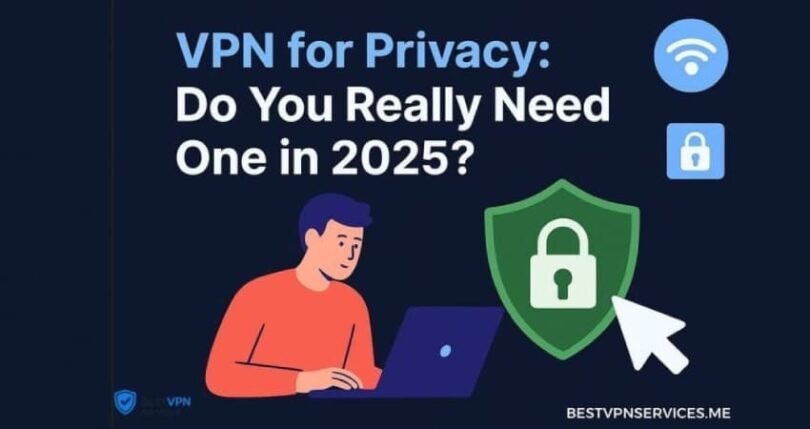

A VPN and How Does it Protect Privacy?
In today’s hyper-connected world, privacy online has become more fragile than ever. Every click, every search, and every connection leaves a digital footprint. From tech giants tracking your habits to cybercriminals targeting unsecured networks, the question arises: how can you take back control of your personal data?
One of the most widely recommended tools is a VPN (Virtual Private Network). But is a VPN really the ultimate solution for privacy? And how does it work in practice? Let’s dive deep into what a VPN does, what it doesn’t, and how it can protect your personal information in 2025.
🔒 What is a VPN and How Does it Protect Privacy?
A Virtual Private Network encrypts your internet connection and routes your traffic through a secure server. This process hides your real IP address and replaces it with the IP of the VPN server.
Here’s why this matters for your privacy:
- ISPs can’t monitor your browsing history: Without a VPN, your Internet Service Provider can see the websites you visit and sell that data to advertisers.
- Your IP address is masked: A masked IP means less exposure to tracking and fewer personalized ads following you around.
- Encryption protects your data: On public Wi-Fi, your sensitive information (passwords, credit cards) could be intercepted. A VPN prevents that with strong encryption.
Think of a VPN as a private tunnel between your device and the internet. No one outside that tunnel can easily see what’s happening inside.
📊 The State of Online Privacy in 2025
While VPNs have existed for decades, their role in 2025 is more relevant than ever.
- Data collection is at an all-time high: Apps and websites collect everything from your location to browsing history.
- AI-driven tracking: Advertisers now use AI algorithms to predict your behavior with scary accuracy.
- Government surveillance expanding: In many countries, online activity is increasingly monitored.
- Cyber threats rising: With remote work and constant online transactions, hackers have more entry points than ever.
A VPN is not a silver bullet, but it significantly reduces exposure to these threats by making your online presence anonymous and encrypted.
🛡️ Benefits of Using a VPN for Privacy
Here are the main ways a VPN boosts your privacy:
1. Hides Your Real Location and Identity
Your IP address can reveal your approximate location. With a VPN, websites and trackers only see the VPN server location, not your home address.
2. Prevents ISP Tracking
ISPs track your browsing data and often sell it. A VPN ensures they only see encrypted traffic, not specific websites.
3. Protects You on Public Wi-Fi
At airports, hotels, or coffee shops, hackers can easily intercept unprotected Wi-Fi. A VPN encrypts your data, blocking man-in-the-middle attacks.
4. Shields from Targeted Advertising
Online ads follow you because of data brokers that build a profile on your browsing. By masking your IP and activity, VPNs reduce this tracking.
5. Helps Avoid Government Surveillance
In restrictive countries, a VPN can bypass censorship and prevent monitoring of your activity.
⚠️ What a VPN Cannot Do (Limitations)
It’s important to be realistic. A VPN is a tool for privacy, not a magic shield.
Here’s what a VPN doesn’t protect you from:
- Phishing attacks: Clicking a malicious link is still dangerous, VPN or not.
- Malware infections: You still need good antivirus protection.
- Cookies and trackers: Some sites can still track you using browser fingerprinting.
👉 In short: A VPN improves privacy, but works best when combined with safe browsing habits, antivirus software, and tracker-blocking tools.
🔑 How to Choose the Best VPN for Privacy
Not all VPNs are equal. Some even harm privacy by logging data or selling user information. Here’s what to look for in a VPN if privacy is your #1 goal:
- No-logs policy (independently audited)
- Ensure the provider does not store your browsing activity.
- Strong encryption
- AES-256 and modern VPN protocols like WireGuard or NordLynx.
- RAM-only servers
- These automatically wipe data on reboot, ensuring nothing is stored.
- Kill switch
- Cuts off your internet if the VPN drops, preventing accidental leaks.
- Jurisdiction
- Choose a VPN based in a privacy-friendly country outside surveillance alliances (like Panama or the British Virgin Islands).
🌍 Best VPNs for Privacy in 2025
Here are some of the most reliable VPNs for privacy you can trust in 2025:
🔹 NordVPN – Best Overall for Privacy
- Panama-based (outside surveillance alliances)
- Strict no-logs policy (audited multiple times)
- NordLynx protocol (based on WireGuard)
- Advanced features like Double VPN and Onion over VPN
🔹 Surfshark – Best Value for Privacy
- Unlimited devices with one subscription
- RAM-only servers in 100+ countries
- Built-in ad and tracker blocker (CleanWeb)
- Affordable long-term plans
🔹 ExpressVPN – Best for Security & Speed
- Based in the British Virgin Islands
- Lightway protocol (fast + secure)
- Audited apps and infrastructure
- Trusted brand with proven track record
🔹 ProtonVPN – Best Free Privacy Option
- Based in Switzerland (strict privacy laws)
- Free plan with unlimited bandwidth
- Open-source apps, regularly audited
- Perfect for privacy-conscious users on a budget
🔄 VPN vs Other Privacy Tools
You might wonder: if I already use ad blockers, private browsers, or antivirus software, do I still need a VPN?
Here’s how they compare:
- Ad blocker: Stops ads but doesn’t hide IP or encrypt traffic.
- Private browser (Brave, Tor, DuckDuckGo): Hides some activity but doesn’t protect your whole device.
- Antivirus: Protects against malware, but doesn’t prevent ISP or website tracking.
- VPN: Encrypts all traffic leaving your device, making it the most complete privacy tool.
👉 The best approach is to combine a VPN with these tools for maximum protection.
📝 Final Thoughts: Is a VPN Worth It for Privacy?
So, should you use a VPN for privacy in 2025?
The answer is a clear YES — if you care about your digital footprint, data security, and online freedom.
While a VPN is not a one-size-fits-all solution, it provides a strong foundation of privacy when paired with good online practices. It hides your IP, prevents ISP snooping, protects you on public Wi-Fi, and reduces tracking.
If privacy is your main concern, choose a provider with a proven no-logs policy, RAM-only servers, and independent audits.
🚀 Take Action: Protect Your Privacy Today
Don’t wait until your personal data is compromised. Here are our top picks again:
- 🔹 NordVPN – Best overall for privacy
- 🔹 Surfshark – Best value & unlimited devices
- 🔹 ExpressVPN – Fast and secure for all devices
- 🔹 ProtonVPN – Strong privacy with a solid free plan
👉 Click the links above to get started and secure your digital life today.




Leave a Comment