

Published on BestVPNServices.me – Updated October 2025
Estimated reading time: 10 minutes
🧩The Hidden Risk Small Businesses Face Online
In today’s digital age, small businesses depend heavily on the internet for communication, payments, and customer management. But with that convenience comes a serious risk — cyber threats.
While large corporations often make headlines for data breaches, small businesses are the easier target. Why? Because most don’t invest in proper cybersecurity measures.
That’s where a VPN (Virtual Private Network) comes in. Once seen as a tool for individuals, a VPN is now one of the most valuable assets for small business owners looking to protect data, maintain privacy, and ensure secure remote access.
In this guide, we’ll explore why every small business needs a VPN in 2025, how it works, and which providers offer the best protection.
🔒 What Is a VPN and How Does It Work?
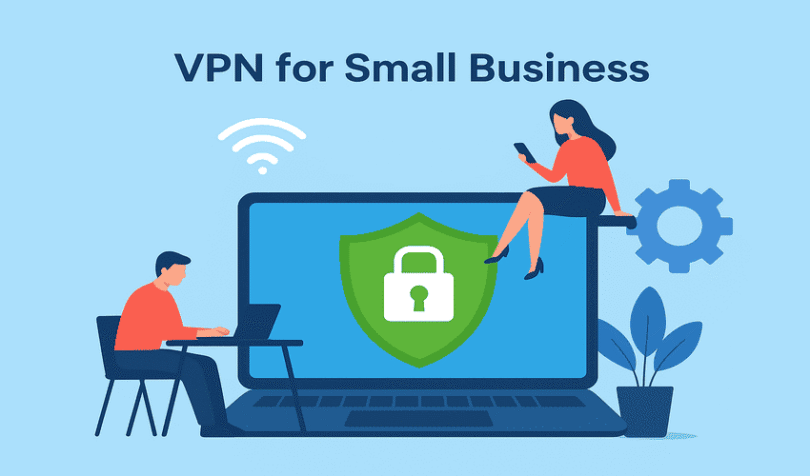
A Virtual Private Network (VPN) creates a secure, encrypted tunnel between your business devices and the internet.
When you or your team connect to a VPN:
- Your data is encrypted (making it unreadable to hackers or ISPs).
- Your IP address is masked, hiding your business’s digital footprint.
- Your team can safely access company systems remotely.
💡 Think of a VPN as your company’s digital shield, protecting all your online activity from spying eyes — whether it’s competitors, cybercriminals, or unsecured public Wi-Fi networks.
🧠 Why Small Businesses Are Prime Targets for Hackers
According to IBM’s Cost of a Data Breach Report 2025, 43% of all cyberattacks target small businesses.
And yet, 60% of those businesses close within six months of a major breach.
Here’s why hackers often go after small businesses:
- Limited security budgets – fewer resources for cybersecurity tools.
- Outdated systems – old routers, unpatched software, and weak firewalls.
- Remote work expansion – employees logging in from unsecured networks.
- Customer data – payment info and personal details are gold for hackers.
With these realities, VPNs are no longer optional — they’re an essential defense layer.
🧰 The 7 Key Benefits of a VPN for Small Businesses
1. Protects Sensitive Data
Every small business handles customer details, invoices, emails, and transactions.
A VPN encrypts all of this data, ensuring no one can intercept it — even on public Wi-Fi.
🔐 Example: If your sales team connects to hotel Wi-Fi during travel, a VPN ensures customer files or login details aren’t exposed.
2. Secure Remote Work and Hybrid Teams
Remote work is here to stay.
A VPN allows employees to connect to your internal systems safely from anywhere, avoiding unauthorized access or IP leaks.
🖥️ Pro Tip: Combine your VPN with two-factor authentication (2FA) for stronger protection.
3. Protects Business IP and Communications
From client emails to confidential files, business communication is valuable.
A VPN prevents eavesdropping or man-in-the-middle attacks by encrypting all traffic between devices and servers.
4. Prevents Data Theft on Public Wi-Fi
Your team might work in cafes, hotels, or airports — all of which are hacker hotspots.
With a VPN active, data packets are unreadable, and sensitive information like passwords or billing data remains private.
5. Avoids Geo-Restrictions and Boosts Flexibility
Need to access region-specific tools, content, or research?
A VPN lets your team connect through global servers, bypassing geographic limits for marketing insights or competitor analysis.
6. Improves Client Trust
Using a VPN isn’t just about protection — it’s about credibility.
Clients feel safer knowing their data is transmitted securely, especially for industries like consulting, finance, or e-commerce.
7. Affordable Security Investment
Unlike enterprise firewalls or complex cybersecurity systems, VPNs are cost-effective.
Plans start at just a few dollars per month — a small price to pay for enterprise-grade protection.
🧾 How to Choose the Right VPN for Your Small Business
When selecting a VPN, don’t just go for the cheapest option.
Look for these key features:
✅ 1. No-Logs Policy
Choose a VPN that doesn’t store any data about your business’s online activity.
(NordVPN, Surfshark, and ExpressVPN all have independently audited no-logs policies.)
✅ 2. RAM-Only Servers
RAM-only infrastructure ensures that no data is stored on physical drives — wiped instantly upon reboot.
✅ 3. High-Speed Performance
For video calls, remote work, and file sharing, speed matters.
Providers with 10Gbps servers and modern protocols (like WireGuard or NordLynx) offer the best performance.
✅ 4. Dedicated IP Option
If your business tools need a consistent IP address (for emails or banking), look for VPNs offering dedicated IPs.
✅ 5. 24/7 Support and Easy Management
A user-friendly dashboard and quick customer support are essential — especially for teams without in-house IT.
🔝 Best VPNs for Small Businesses in 2025
Below are recommended VPNs tested and reviewed by BestVPNServices.me:
| VPN Service | Best For | Key Features | Try It |
|---|---|---|---|
| NordVPN | All-around security & speed | NordLynx protocol, Threat Protection, RAM-only servers | Get NordVPN |
| Surfshark | Budget-friendly, unlimited devices | CleanWeb ad-blocker, No-logs, Fast servers | Get Surfshark |
| ExpressVPN | Premium performance | Lightway protocol, independent audits, easy setup | Get ExpressVPN |
| PureVPN | Dedicated IPs & flexibility | Global coverage, strong encryption | Get PureVPN |
💡 How to Set Up a VPN for Your Business (Step-by-Step)
- Select a trusted VPN provider → visit Best VPN Services.
- Create an account and choose a plan that supports multiple users.
- Download the app on all business devices.
- Activate the VPN and choose a nearby server for better speed.
- Enable kill switch and auto-connect to ensure constant protection.
- Train your team on safe browsing habits.
⚠️ What a VPN Won’t Do
While VPNs are powerful, they’re not magic shields.
Here’s what they can’t protect you from:
- Phishing emails – always verify links before clicking.
- Malware – use antivirus tools alongside your VPN.
- Insider threats – enforce access controls and password policies.
Combine your VPN with strong cybersecurity hygiene for full protection.
🧩 Extra Privacy Tools for Small Businesses
For maximum security, pair your VPN with:
- Password manager – (e.g., Bitwarden or 1Password).
- Antivirus software – (e.g., Bitdefender, Norton).
- Secure cloud storage – (e.g., Tresorit, Sync.com).
- Multi-factor authentication (MFA) tools.
🔗 Learn more in our guide: VPN for Privacy: Do You Really Need One in 2025?
🌍 External Resources for Business Security
- Cybersecurity & Infrastructure Security Agency (CISA)
- National Cyber Security Centre (UK)
- Forbes: How Small Businesses Can Stay Cyber-Safe
🧾 Final Thoughts: Why Your Small Business Needs a VPN Today
In 2025, online privacy and security aren’t luxuries — they’re essentials.
A single data breach can ruin years of hard work, destroy trust, and drain your finances.
By implementing a VPN, your business gains:
- Encrypted communication
- Safer remote work
- Stronger client confidence
- Compliance with data protection standards
So don’t wait for a security incident to act — invest in a VPN now and take back control of your digital safety.
✅ Start protecting your business today:
Compare the Best VPN Services of 2025 →





Leave a Comment